


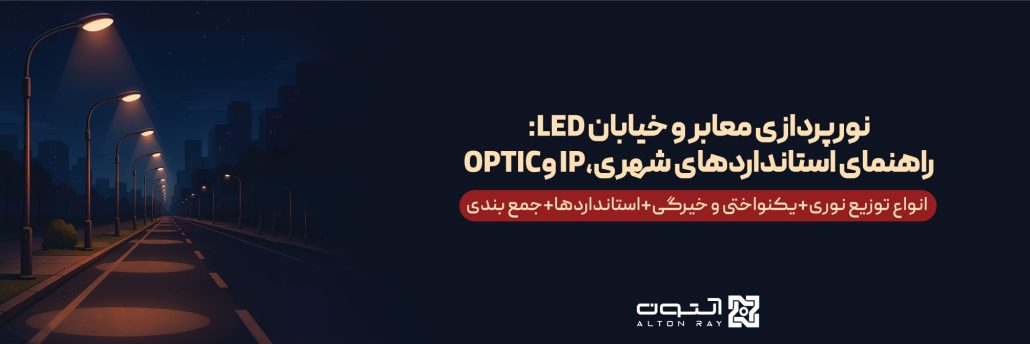
Street and road lighting is the backbone of urban safety and public security. This critical infrastructure needs careful engineering so that drivers, pedestrians and the urban environment are lit effectively and efficiently. Choosing LED street lights with the right specifications not only cuts energy use but directly reduces accidents and improves quality of life.
For road and urban projects, explore Alton Ray LED street lights and the Sahand series, plus LED floodlights for squares, parks and car parks.
This is a technical guide for engineers, municipalities and civil contractors.
1. Road Lighting Classes: Standardising Safety (CIE & IESNA)
Road lighting design depends on road use, traffic volume and speed limit. International references such as CIE and IESNA divide roads into three main groups:
1.1. M Classes (Motorised Traffic): Highways and Main Arteries
- Goal: fast, clear visibility for drivers at high speed.
- Main metric: road surface luminance (cd/m²).
- Requirement: the highest uniformity, to avoid dark patches that disturb drivers at speed.
1.2. C Classes (Conflict Areas): City Centres and Commercial Streets
- Goal: recognising pedestrians and roadside obstacles in mixed traffic and busy junctions.
- Main metric: illuminance (lux) on the footway.
- Requirement: higher CRI (usually > 70) for better recognition of colours and faces.
1.3. P Classes (Pedestrian Areas): Alleys and Footpaths
- Goal: pedestrian safety, obstacle detection and visual comfort.
- Main metric: lux on the path surface.
- Requirement: glare control and warmer colour temperatures (about 3000K–4000K) in residential areas.
2. Optics: Engineering the Light Distribution
The biggest quality difference between LED street lights is in the optics. Unlike general floodlights, a street light must spread light in a controlled rectangular pattern along the road.
2.1. IESNA Distribution Types
| Type | Distribution | Typical use |
|---|---|---|
| Type II | Medium lateral spread, long throw | Two-lane streets with poles on one side |
| Type III | Wider lateral spread | Wider streets and arteries needing more cross-road coverage |
| Type IV | Narrow forward throw | Wall or column mounting close to the roadside |
Tip: match the optic type to road width, pole height and spacing to achieve optimum uniformity and avoid light spill onto homes.
2.2. Uniformity and Glare
- Uniformity (U0): prevents the light/dark “zebra” effect that strains drivers’ eyes. On highways U0 should be at least 0.4.
- Glare control: luminaire design and LED placement must keep the threshold increment (TI) low so drivers are not dazzled.
Which Optic Fits Your Road Class?
Send us the road width, pole height and spacing. We match the IESNA optic type and confirm luminance and uniformity.
LED Street Lights for Roads and Highways
Street luminaires with asymmetric optics and IP66 protection. See all →


3. Durability Standards (IP66 and IK08)
3.1. IP66: Total Environmental Protection
- IP6X (dust-tight): dust inside the housing settles on chips, raises temperature and reduces lumen output.
- IPX6 (powerful water jets): protects drivers and LEDs in heavy rain, traffic spray and low-pressure washing.
3.2. IK08: Resistance to Vandalism and Impact
IK08 protects street lights against deliberate impacts (such as thrown stones) and accidental knocks from maintenance vehicles, minimising repair and replacement costs.
4. Smart Control and Energy Savings
Street lights run 11–12 hours a day, 365 days a year, and consume a large share of a city’s electricity. Smart LED systems cut this cost significantly.
4.1. Dimming Profiles
- Evening: 100% output until midnight.
- Late night: 60–70% output during low-traffic hours (midnight to 4 am).
- Dawn: back to 100% before sunrise.
4.2. Central Management and Remote Control
Modern LED street lights include standard sockets (such as NEMA or Zhaga) for control modules, so municipalities can monitor each luminaire’s consumption, temperature and faults in real time and change dimming profiles remotely.
5. Lighting Classes M, C and P at a Glance
| Class | Road type | Metric | Minimum value | Uniformity (U0) |
|---|---|---|---|---|
| M1 | Main highway, high speed | Luminance (cd/m²) | 2.0 | 0.50 |
| M3 | Main urban artery, medium speed | Luminance (cd/m²) | 1.0 | 0.40 |
| M5 | Collector street, medium traffic | Luminance (cd/m²) | 0.75 | 0.35 |
| C1 | Busy junctions, commercial areas | Illuminance (lx) | 20 | 0.40 |
| C3 | Side streets, mixed footways | Illuminance (lx) | 15 | 0.30 |
| P1 | Main footpaths | Illuminance (lx) | 10 | 0.25 |
| P3 | Alleys and minor paths | Illuminance (lx) | 5 | 0.20 |
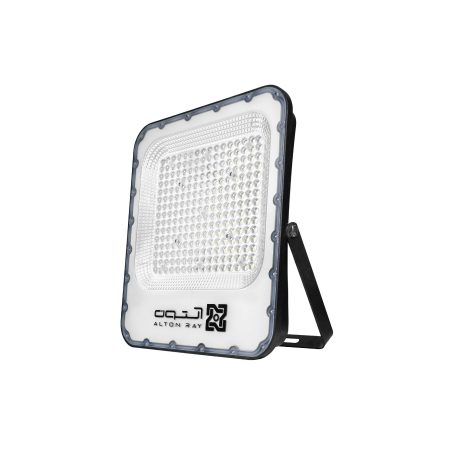
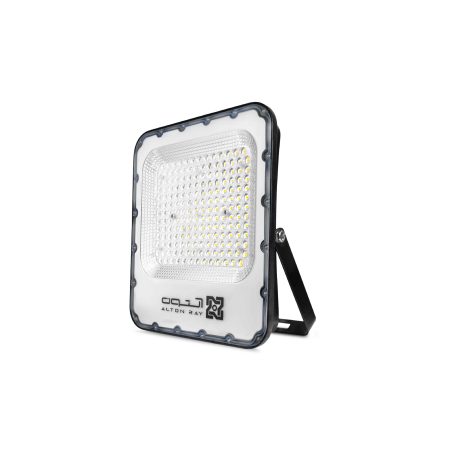
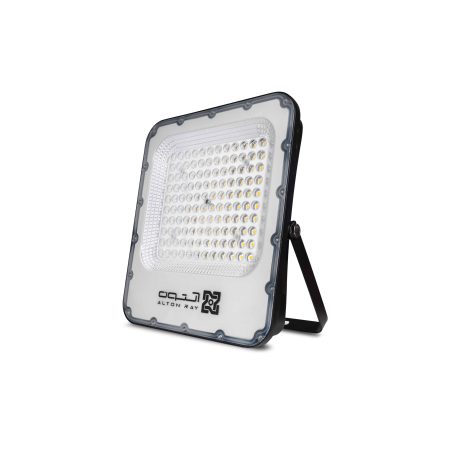
Floodlights for Squares, Parks and Car Parks
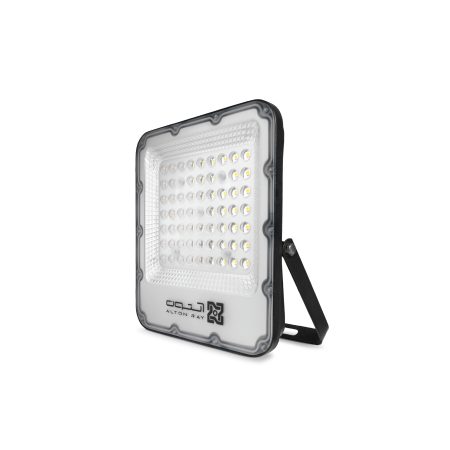
Area lighting for public spaces next to your roads. See all →
Running a Municipal or Highway Tender?
We provide photometric files, calculations and technical documents for road lighting tenders and city projects.
6. Conclusion
Switching to LED road lighting is a key step towards smart, sustainable cities. Choosing a street light goes beyond wattage: it depends on understanding lighting classes (M, C, P), precise IESNA optics and maximum durability with IP66 and IK08.
Alton Ray manufactures LED street lights with engineered optics and high protection ratings, including the Sahand series. Is your municipality replacing old road lighting? Contact our engineers for advice on optics and CIE/IESNA lighting classes.