

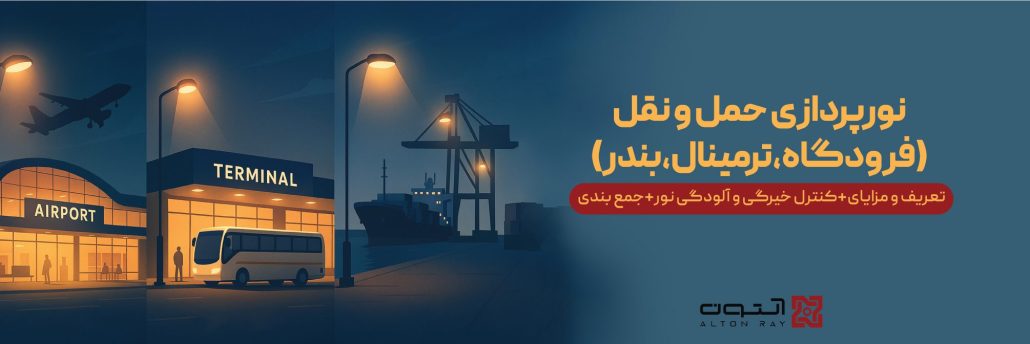
Airports, seaports, rail yards, bus terminals and logistics hubs operate 24 hours a day. Their lighting must keep people, vehicles and cargo safe across very large areas, support security cameras, resist wind, salt and vibration, and do all this at the lowest possible energy and maintenance cost. This guide explains the main lighting requirements for transport infrastructure and how to choose high mast and floodlight solutions for each zone.
For large open areas, explore Alton Ray high-power LED floodlights for high masts and towers, and LED street lights for access roads and gates.
Lighting Requirements by Zone
| Area | Maintained illuminance | Uniformity (Uo) | Typical solution |
|---|---|---|---|
| Airport apron (aircraft stands) | 20 to 50 lux | 0.25 to 0.5 | High mast floodlights, glare-controlled |
| Container terminal, active area | 20 to 50 lux | 0.25 to 0.4 | High mast 30 to 40 m |
| Container storage yard | 10 to 20 lux | 0.25 | High mast or tall poles |
| Rail yard and sidings | 10 to 20 lux | 0.25 | Floodlights on towers |
| Loading and unloading areas | 50 to 100 lux | 0.4 | Floodlights or high bays under canopies |
| Bus and truck parking | 10 to 20 lux | 0.25 | Area lights on poles |
| Access roads and gates | According to road class | 0.4 | LED street lights |
High Mast Lighting: When and Why
A high mast is a pole of 20 to 45 metres carrying a ring of several floodlights. One high mast can light a very large area with few obstacles on the ground, which is essential in ports, airports and yards where cranes, aircraft and trucks move freely. Fewer poles also mean fewer foundations, cables and collision risks. Most high masts have a winch-operated lowering ring so luminaires can be serviced safely at ground level.
Lighting a Port, Apron or Rail Yard?
Share your site plan and mast heights. We select floodlight optics and calculate lux and uniformity for every zone.
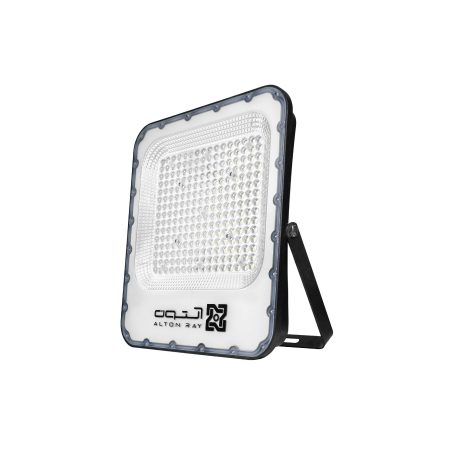
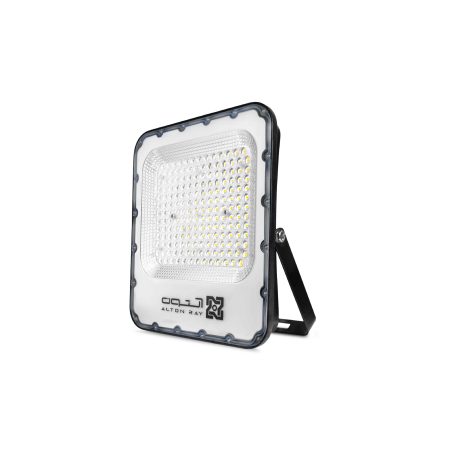
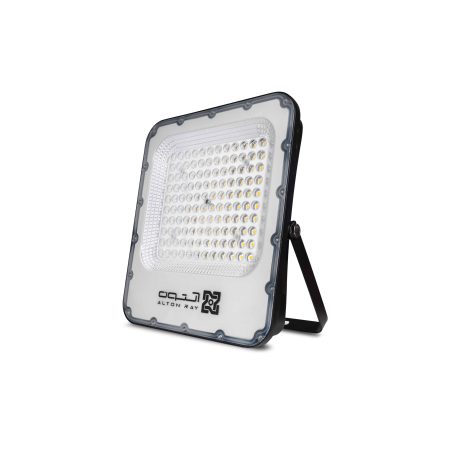
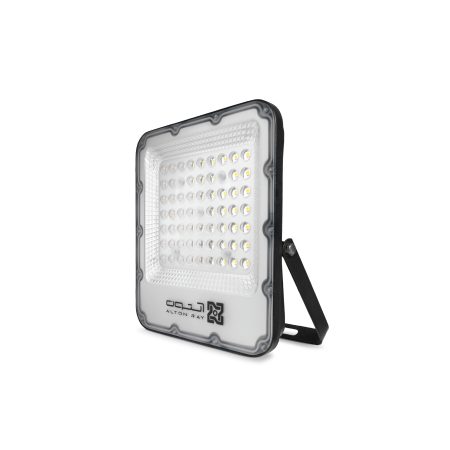
High-Power Floodlights for High Masts
Long-throw floodlights for terminals, yards and aprons. See all →
Optics and Glare Control
Large open areas need precise optics to put light where it is required and nowhere else.
- Narrow and medium beams (15 to 40 degrees) reach the far edges of the area from tall masts.
- Asymmetric optics keep the luminaire glass horizontal, reduce glare for pilots, crane operators and drivers, and limit light spill into the sky.
- Glare shields and visors are important near runways, control towers and residential neighbours.
Durability in Harsh Outdoor Conditions
- IP66 to resist rain, dust and high-pressure cleaning.
- Corrosion protection: marine-grade powder coating and stainless steel fixings for coastal ports.
- Vibration resistance: masts move in wind and near heavy machinery, so brackets and drivers must be secure.
- Surge protection of 10 kV or more against lightning on tall structures.
- Wide temperature range for desert heat and winter cold.
Security, Cameras and Smart Control
CCTV cameras need even light, good colour rendering and no flicker to identify people and vehicles. LED floodlights with CRI 70 or higher and stable drivers improve image quality compared with sodium lamps. With smart control, lighting can be dimmed in quiet hours and raised instantly when a ship berths, a flight arrives or motion is detected, which saves energy without reducing safety.
LED vs Metal Halide and Sodium
| Feature | LED floodlight | Metal halide / sodium |
|---|---|---|
| Energy use for the same light | 50 to 70% lower | High |
| Warm-up and restrike | Instant | 5 to 15 minutes |
| Dimming and control | Full | Limited |
| Lifetime | Very long | Short, frequent relamping at height |
| Colour rendering for cameras | Good to excellent | Poor (sodium) |
Street Lights for Access Roads and Gates
Road luminaires for terminal entrances and internal roads. See all →


Replacing Sodium Lamps on High Masts?
Cut energy and maintenance at height with LED floodlights. Ask us for a retrofit plan with lowering-ring compatibility.
FAQ
How high should a high mast be?
Typically 20 to 45 metres. Ports and large aprons use 30 to 40 metre masts; smaller yards and interchanges use 20 to 25 metres.
How many lux does a container terminal need?
About 20 to 50 lux in active working areas and 10 to 20 lux in storage zones, with a uniformity of at least 0.25.
Which IP rating is required for port lighting?
IP66 with corrosion-resistant coating is recommended because of salt spray, rain and high-pressure cleaning.
Can Alton Ray supply lighting for transport projects?
Yes. We supply high-power LED floodlights and street lights and prepare free lighting calculations for ports, terminals, yards and access roads.